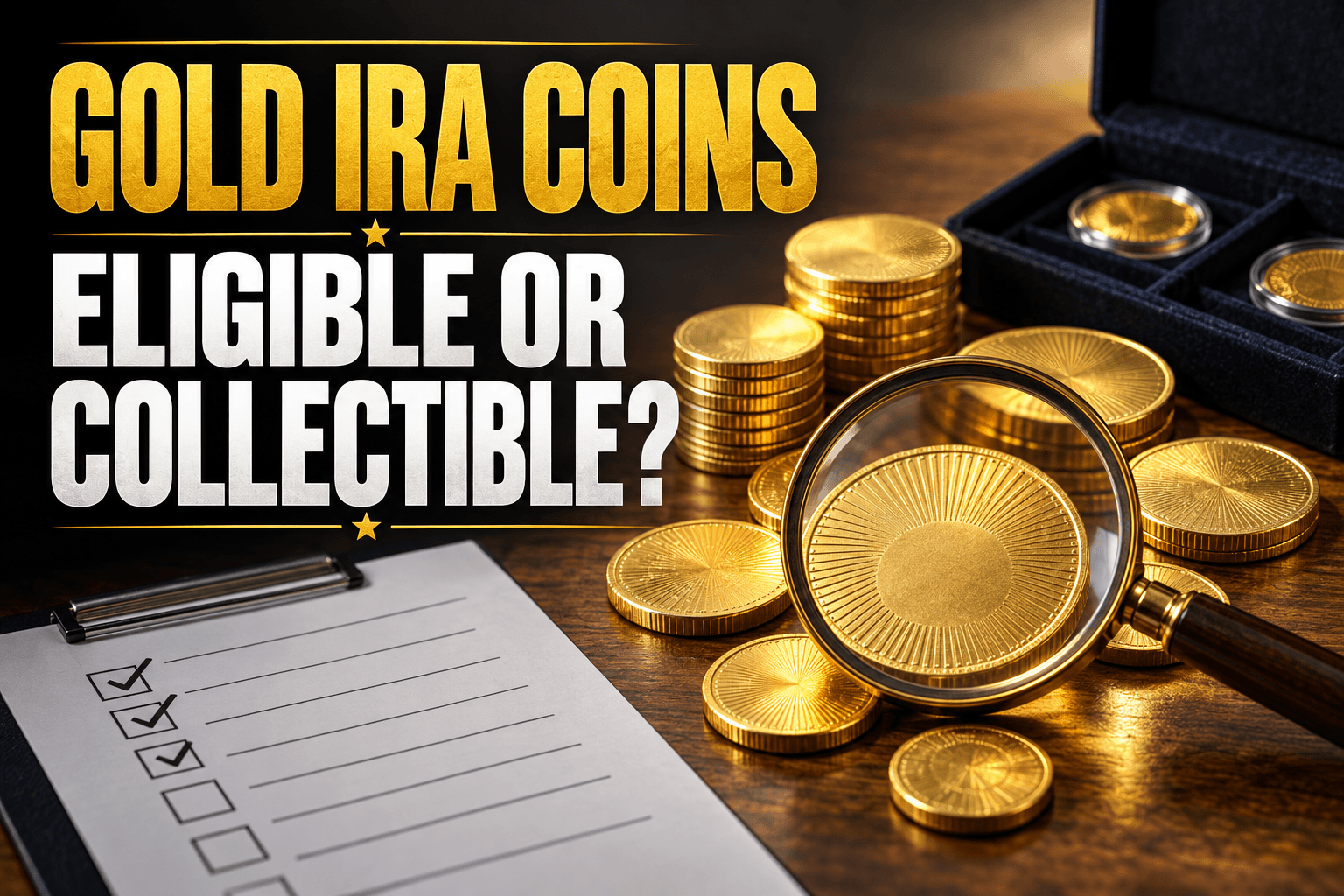

A coin can look like bullion, be sold by a precious-metals dealer, and still be a poor fit for an IRA. The label “IRA eligible” is not a substitute for checking the exact product, the legal exception it relies on, and whether your custodian will approve and hold it.
This guide explains how the collectibles rule works, why fineness is only part of the test, and how to screen a Gold IRA coin before retirement funds leave your account.
Why Gold IRA Coin Eligibility Deserves Its Own Check
Gold IRA investors often concentrate on price, dealer reputation, and storage. Those questions matter, but eligibility comes first. Under Internal Revenue Code Section 408(m), coins and metals are generally treated as collectibles unless a specific exception applies.
The distinction can carry real tax consequences. The IRS explains that acquiring a collectible through an individually directed account can be treated as an immediate distribution equal to the account’s cost. Ordinary income tax may apply, and an additional early-distribution tax may also apply depending on the investor’s age and circumstances.
Key takeaway: A beautiful coin is not automatically a suitable retirement asset. Confirm eligibility before the custodian sends funds.
Start With the Collectibles Rule, Not a Dealer Label
The tax code begins with a broad rule: metals and coins are collectibles. It then carves out limited exceptions. In practical terms, an IRA purchase should fit one of the recognized coin exceptions or qualify as bullion of the required fineness while remaining in the physical possession of a bank or approved non-bank trustee.
The IRS summarizes the exceptions in three groups:
 Certain gold, silver, and platinum coins described in federal coinage law
- Coins issued under the laws of a U.S. state
- Gold, silver, platinum, or palladium bullion meeting the statutory fineness requirements and held by the proper trustee
That framework is more reliable than a product-page badge. A custodian may also maintain an operational approval list, so legal eligibility and account-level acceptance should both be confirmed.
 Request a FREE Gold & Silver IRA Kit Today!
Fineness Is Important, But It Is Not the Only Test
Investors often hear that eligible bullion must meet minimum purity standards. That is true for the bullion exception, but purity by itself does not settle every coin question.
A careful review should consider all of the following:
- Metal content: Does the item meet the applicable fineness standard or fall under a separate statutory coin exception?
- Product type: Is it bullion, a proof issue, a graded coin, a commemorative coin, or a numismatic product?
- Issuer: Was it issued under the law referenced by the applicable exception?
- Custody: Will the IRA’s bank or approved nonbank trustee retain physical possession?
- Custodian approval: Will the custodian accept the exact year, denomination, and version shown on the invoice?
This is one reason a broad list of “approved coins” can mislead. Bullion and proof versions of a similarly named coin may not be treated identically, and packaging or grading details can change how a custodian handles the product.
Why the American Gold Eagle Is a Useful Example
 The American Gold Eagle helps illustrate why investors should not rely on purity alone. Its alloy is less pure than the general gold-bullion threshold, yet certain coins described in federal law receive separate treatment under the statutory coin exception.
The lesson is not that every government coin qualifies. It is that eligibility can come from a specific legal exception rather than the general bullion-fineness rule. Your purchase file should identify which route supports the exact coin being acquired.
For a broader explanation of qualifying products, see the related IRA-approved bullion guide on HowToInvestGold.com. Confirm the current treatment with your custodian before placing an order.
Why Rare, Graded & Proof Coins Need Extra Caution
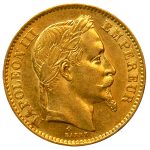 Collectible-style products often carry value tied to rarity, condition, packaging, grading, or collector demand rather than metal content alone. That can complicate both eligibility and pricing.
Warning signs worth pausing over include:
- A large premium justified mainly by scarcity or a grade
- Sales language emphasizing “limited edition,” “exclusive,” or future collector value
- A coin name that appears on an eligibility list without the exact year or version
- A proof coin offered without written custodian confirmation
- An invoice that does not state metal, weight, quantity, and precise product description
- Pressure to buy before the custodian reviews the product
Some proof coins may fit a specific statutory exception, while others may not. Rather than applying a blanket rule, ask the custodian to approve the exact item in writing.
Use a Five-Step Prepurchase Verification Process
A short process can prevent a costly misunderstanding:
- Step 1. Request the exact product specification. Obtain the coin’s full name, mint, year, denomination, metal, weight, fineness, condition, and whether it is bullion, proof, or graded.
- Step 2. Ask which eligibility exception applies. The answer should point to the specific coin exception or the bullion-fineness and custody requirements.
- Step 3. Send the specification to the custodian. Request written approval before authorizing payment.
- Step 4. Review the complete quote. Compare the metal value, dealer premium, shipping, storage, and expected resale terms.
- Step 5. Confirm delivery and inventory records. The depository receipt and account statement should match the invoice.
This workflow keeps the dealer, custodian, and depository roles clear. If those responsibilities are unfamiliar, review our guide to Gold IRA custodians, dealers, and depositories.
Eligibility Does Not Make a Coin a Good Value
A coin may be acceptable for an IRA and still be overpriced. Eligibility answers a tax-compliance question; it does not answer whether the product offers efficient exposure to gold.
Before buying, compare:
- The dealer’s selling price against the metal’s reference price
- The dollar and percentage premium
- The dealer’s current repurchase bid for the same product
- Any liquidation, shipping, or handling costs
- Whether the premium is likely to be recognized in a future resale quote
Our guide to Gold IRA dealer spreads explains how to compare buy and sell quotes on the same basis. Avoid assuming that a higher retail price will produce a higher resale value.
Keep Records That Identify the Exact Coin
Generic descriptions such as “gold coins” are not enough for a well-documented retirement account. Keep records that allow the transaction to be reconstructed later.
- Dealer invoice with precise product descriptions and quantities
- Written custodian approval
- Trade confirmation and payment record
- Shipping and depository receipt
- Account statement showing the correct inventory
- Any certificate or mint documentation relevant to the product
Reconcile those documents after the purchase. Our article on reading a Gold IRA statement shows how to compare quantities, descriptions, values, and fees.
What Happens If an IRA Buys an Ineligible Collectible?
The IRS position is serious: the account can be treated as having distributed the cost of the collectible in the year it was acquired. That amount may be taxable, and the 10% additional tax on early distributions may apply if the owner is under age 59½ and no exception applies.
If you discover a questionable purchase, do not move, sell, or personally take possession of the coin without advice. Contact the custodian and a qualified tax professional promptly. The correct response depends on the facts, account type, transaction date, and reporting already completed.
Personal use or possession can create additional concerns. Our guide to Gold IRA prohibited transactions covers related self-dealing risks.
Questions to Ask Before Authorizing the Trade
Use these questions during the final review:
- What is the exact mint, year, denomination, version, and fineness?
- Is this bullion, proof, graded, or numismatic?
- Which Section 408(m) exception supports eligibility?
- Has my custodian approved this exact product in writing?
- What percentage of the price is metal value versus premium?
- What would the dealer pay to repurchase it today?
- Where will it be stored, and how will it appear on my statement?
If any answer is vague, pause the purchase. Retirement-account compliance should not depend on verbal assurances or marketing shorthand.
The Bottom Line
Gold IRA coin eligibility is a product-specific question. Begin with the Section 408(m) collectibles rule, identify the applicable exception, verify custody, and obtain written approval for the exact item. Then evaluate its premium and resale economics separately.
That order matters: first determine whether the coin belongs in the IRA, then decide whether it belongs in your portfolio.
Request a FREE Gold & Silver IRA Kit Today!